Scientists turn cacti into organic electricity sources
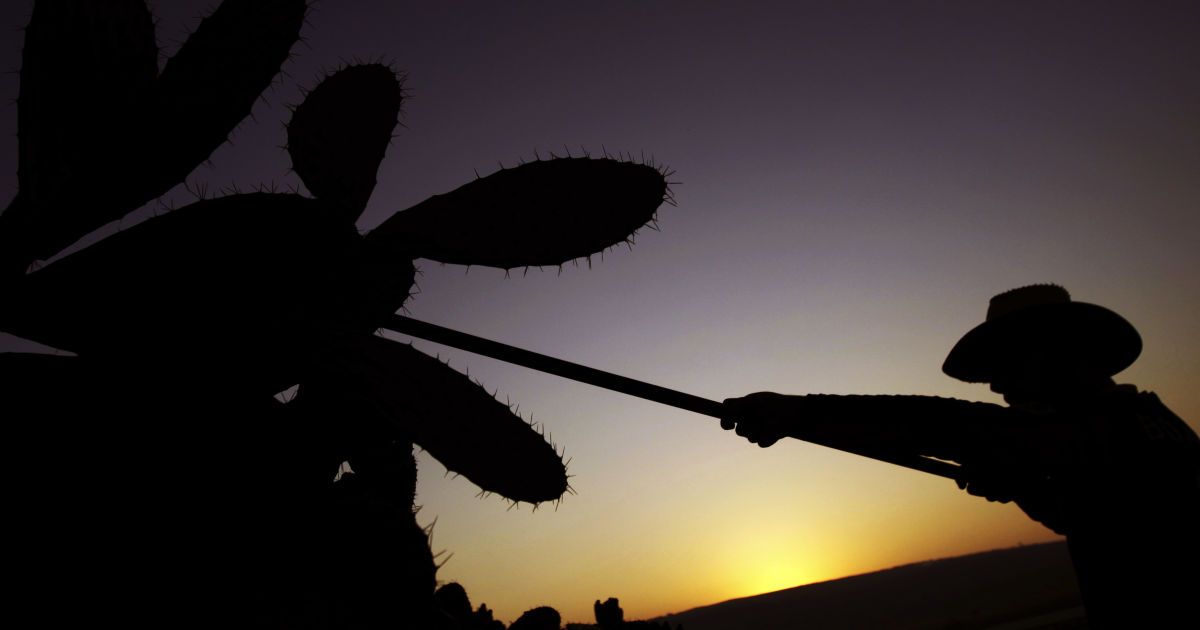
Researchers from the University of California have developed a method to generate electric current using prickly pear cacti by leveraging their unique photosynthesis mechanism.
 💡Tech
Photo: TSN
Key points
- Prickly pear generates current via CAM photosynthesis
- pH gradient creates up to 0.5 volts per stem
- Technology suitable for powering agricultural sensors
A group of scientists from the University of California, Santa Cruz, has made an unexpected discovery, finding a way to harvest electricity directly from plants. The subject of the study was the prickly pear cactus, whose biological features allow it to function as a natural solar panel.
The principle of the "bio-battery"
The key to current generation lies in a special type of photosynthesis known as Crassulacean Acid Metabolism (CAM). This mechanism allows plants such as prickly pears, aloe, or pineapples to store carbon dioxide at night, converting it into malic acid. During the day, under sunlight, the plant uses this compound for further processes.
- A single prickly pear stem can generate a voltage of about 0.5 volts.
- Connecting eight stems allowed the researchers to obtain 4.5 volts, equivalent to the power of three standard AA batteries.
The researchers, including Professor Michael Loik and graduate Charlie Chesney, found that the difference in acidity between the illuminated and shaded sides of the stem creates a pH gradient. Installing electrodes allows this energy to be harvested.
Application prospects
The development has practical significance for the agricultural sector. The study's authors suggest that such "living batteries" could power sensors that monitor crop health and environmental conditions. Furthermore, voltage readings can serve as an indicator of the plant's own health, signaling its physiological status.
Source TSN — tsn.ua/nauka_it/roslyna-iaka-vyrobliaye-elektryku-vcheni-zrobyly-nespod… ↗
Read next
 🛡️Security
International Partners Agree on Security Guarantee Mechanisms for Ukraine
Leaders of key European nations and Ukraine have reached an agreement on legally binding security guarantees post-ceasefire and increased defense support.
 🇺🇦Ukraine
Volodymyr Zelenskyy outlines Ukraine's security priorities at Berlin meeting
The President of Ukraine emphasized that NATO membership and EU integration are essential pillars of the nation's future security architecture.
 🛡️Security
EU and Partners Agree on Massive Aid Package and Security Guarantees for Ukraine
In Berlin, leaders of partner countries announced 90 billion euros in financial aid and the development of security mechanisms following a ceasefire.
 🛡️Security
Situation in occupied Crimea: Simferopol residents stock up on goods following attacks on Kerch Bridge
Following a series of strikes on the Kerch Bridge, panic buying of food and fuel has been reported in occupied Simferopol.
 🚌Transport
Road sign R9-4: what the 'thumbs up' symbol means
We explain the meaning of the specific R9-4 road sign used in the US to prohibit hitchhiking and why understanding international traffic rules is important.
 ⚽Sport
Oleksandr Usyk shares details of his interactions with global sports stars
Ukrainian boxer Oleksandr Usyk discussed his personal conversations with Cristiano Ronaldo and his friendship with Anthony Joshua.